
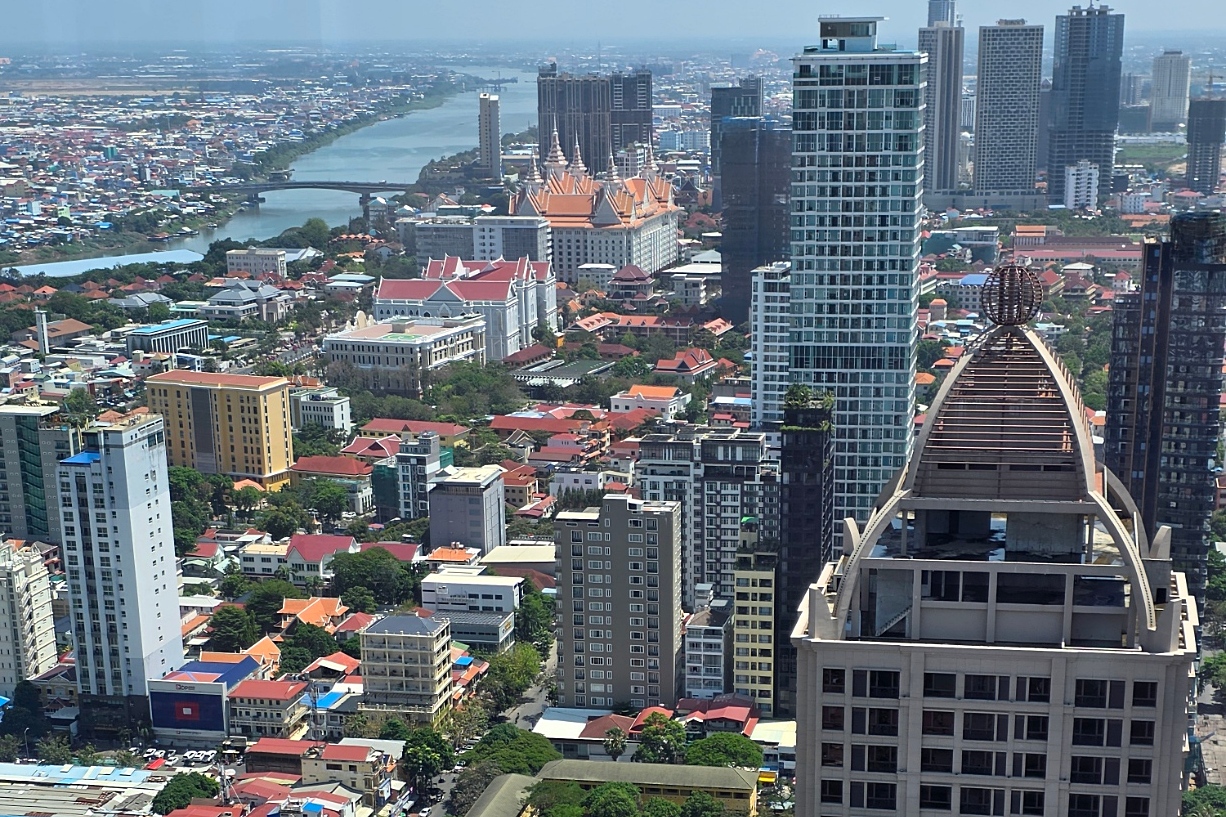
Phnom Penh, the capital of Cambodia, is a city that defies simple categorization. Once called the “Pearl of Asia” for its elegant French colonial architecture and tree-lined boulevards, it survived decades of difficult history in the late 20th century. However, the Phnom Penh of 2026 is a very different reality. Today, it’s a bustling, dynamic metropolis, where gleaming glass skyscrapers cast shadows over gilded pagodas, and traditional tuk-tuks navigate the same congested streets as luxury European SUVs.
For many expats and digital nomads, Phnom Penh represents one of the last enclaves of “authentic” Southeast Asia—a place where the rapid pace of development has not yet completely erased the local charm and hospitality for which the Khmer people are renowned. However, moving to such a dynamic, sometimes chaotic environment is not a decision to be taken lightly.
This article was created to provide an objective, in-depth analysis of the realities of life in Phnom Penh in 2026. We will explore both the daily joys and frustrations of expat life and the complexities of the local real estate market. We will place particular emphasis on key issues for potential residents and investors: the simplicity of the visa system, the dollarization of the economy, as well as challenges such as infrastructure, healthcare, and the limited job market. Whether you’re drawn to the low cost of living, the entrepreneurial spirit of a growing economy, or a thirst for cultural adventure, understanding the nuances of life in the “Kingdom of Wonders” is essential.
PART I: THE ADVANTAGES OF LIFE IN PHNOM PENH
1. A straightforward visa situation – stress-free legalization of your stay
One of Cambodia’s greatest advantages, especially in comparison with neighboring countries, is its exceptionally accessible and flexible visa system. While Thailand and Vietnam are tightening regulations, introducing stringent financial requirements, and forcing people into burdensome “visa runs,” Cambodia remains an oasis of simplicity.
The basis for long-term stay is the ordinary “E-class” visa (Ordinary Visa). Upon arrival, you can apply for this visa and then extend it for periods of 6 or 12 months. Importantly, the extension categories are flexibly tailored to the needs of foreigners:
- EB – for people running a business or working,
- ER – for retirees,
- EG – for people seeking work.
The entire process is relatively uncomplicated and can be handled through licensed visa agents for around $300-$600 per year. In practice, this means you can focus on life and work rather than constantly watching your visa expiry dates.
2. A dollarized economy – financial stability and a safe haven
Cambodia has a dual-currency system that is unique on a global scale. The official currency is the riel (KHR), but in practice the economy is heavily dollarized. US dollars (USD) are widely accepted for all larger transactions: rent payments, property purchases, in restaurants, and in supermarkets.
For an expat, this means several key benefits:
- No currency risk: Your income and savings are in USD, which provides a natural safeguard against fluctuations in local currencies that often affect neighboring economies.
- Nominal stability: Even if the US dollar loses purchasing power globally (inflation), in Cambodia the prices of many local goods and services rise more slowly than in the West. This means that your purchasing power in local terms (eating out, services, domestic help) remains high.
- Ease of financial planning: Both property prices and rents are denominated in dollars, which makes long-term budget planning easier.
Of course, for everyday small payments (markets, tuk-tuks), you will receive change in riel, which takes some getting used to, but the system works smoothly and intuitively. The government has been trying for years to increase the role of the riel, but the dollar remains the dominant currency in the economy.
3. Ease of opening bank accounts and moving capital
In recent years, Cambodia’s banking sector has undergone a genuine digital revolution, putting it at a level much higher than one might expect from a developing market. For foreigners, the process of opening an account is surprisingly simple.
- ABA Bank: It is the clear favorite among expats. Its mobile app is intuitive, modern, and enables instant QR-code payments (KHQR) in virtually every shop, restaurant, or even at a street stall. Opening an account usually requires a passport with a valid visa and a rental or employment contract. The entire procedure often takes less than an hour.
- Bakong system: Cambodia has leapfrogged traditional banking and implemented the blockchain-based Bakong payment system. For residents, this means the ability to make instant transfers, which makes everyday financial life more efficient.
- Capital movement: Unlike many countries in the region, Cambodia does not impose restrictive capital controls. Transfers of funds abroad and investments are relatively simple and free of unnecessary bureaucracy.
4. Warm climate for 12 months of the year
For people tired of the long, gray winters of Northern or Central Europe, Phnom Penh offers what is most valuable – sunshine and warmth all year round. The climate is tropical, with a clear division into two seasons:
- Dry season (November – April): This is the golden period. Temperatures are slightly lower (though they still hover around 28-32°C), humidity drops, and the days are sunny and pleasant. It is the ideal time to explore the city and travel around the country and neighboring countries.
- Rainy season (May – October): Temperatures rise (30-35°C), and the afternoons bring intense, though usually brief, downpours. They bring relief from the heat and cleanse the air. The city then takes on an intensely green color.
Life in a tropical climate is not just a pleasure, but also a lifestyle. Morning coffee on the terrace, an afternoon siesta in an air-conditioned apartment, evening outings when the temperature drops – it is a rhythm you can quickly get used to. For families with children, it means the opportunity to spend time at the pool and outdoors for most of the year.
5. Affordability – a luxury lifestyle on an average national salary
This is one of the strongest arguments in favor of moving to Phnom Penh. Although prices have risen over the last decade, the city still remains one of the most affordable capitals in Southeast Asia. Moreover, the key difference lies not only in the prices themselves, but in the structure of spending and purchasing power.
The table below shows the actual prices of specific goods and services, allowing for a better understanding of differences in purchasing power than aggregated monthly categories.
|
|
Phnom Penh (USD) |
Warsaw (USD) |
Berlin (USD) |
London (USD) |
| Rent – 1 bedroom in city center | $450 – $1,000 | $1,100 – $1,400 | $1,600 – $2,200 | $2,800 – $3,80 |
|
Dinner for 2 at a mid-range restaurant (3 courses) |
$20 – $35 |
$50 – $70 |
$70 – $100 |
$100 – $150 |
|
Street food / meal out |
$1.50 – $3.00 |
$8 – $12 |
$10 – $15 |
$12 – $20 |
|
Local beer (0.5L) at a bar |
$1.00 – $2.50 |
$4.00 – $6.00 |
$4.50 – $6.50 |
$7.00 – $10.00 |
|
Coffee (cappuccino) at a cafe |
$2.00 – $3.50 |
$4.50 – $6.00 |
$4.00 – $6.00 |
$5.00 – $8.00 |
|
Eggs (12 pcs.) |
$1.80 – $2.50 |
$3.00 – $4.50 |
$3.50 – $5.00 |
$4.00 – $6.00 |
|
Local fruit (mango, durian, dragon fruit – per kg) |
$1.00 – $3.00 |
$5.00 – $12.00 (import) |
$6.00 – $15.00 (import) |
$8.00 – $20.00 (import) |
|
Bottle of wine (mid-range) |
$8 – $15 (imported) |
$8 – $15 |
$7 – $14 |
$10 – $18 |
|
Tuk-tuk / Grab ride (short distance, 2-3 km) |
$2.00 – $4.00 |
$8 – $12 (Uber/taxi) |
$12 – $18 (Uber/taxi) |
$15 – $25 (Uber/taxi) |
|
Monthly gym membership (premium) |
$50 – $80 (but often included in condo rent) |
$60 – $90 |
$80 – $120 |
$100 – $200 |
|
Thai / Khmer massage (1h) |
$8 – $15 |
$40 – $70 |
$60 – $100 |
$80 – $150 |
|
Cinema ticket (new release) |
$5 – $8 |
$8 – $12 |
$12 – $16 |
$15 – $25 |
|
Doctor’s visit (private, GP) |
$40 – $80 |
$60 – $100 |
$80 – $150 |
$200 – $350 |
|
Domestic help (daily rate / cleaning) |
$15 – $25 per visit |
$30 – $50 per hour |
$40 – $70 per hour |
Key takeaways from the item-by-item comparison:
- Eating out is a huge gap: What is an occasional luxury in Europe (dinner at a good restaurant) can be an everyday occurrence in Phnom Penh. Dinner for two with wine for $40? In London that’s a starter; in Phnom Penh, it is a lavish meal.
- Purchasing power in services: A $10 massage, $20-a-day domestic help, a $3 taxi – these are prices that disappeared in Europe 20 years ago. It is precisely in services that Phnom Penh’s real advantage lies.
- Imported products level out: Wine, cheese, breakfast cereals, or electronics can cost as much as in Europe, sometimes even more. You do not save on everything – you save on local goods and services.
- An upgraded apartment for free: Modern condos in Phnom Penh typically offer a pool, gym, sauna, and sometimes even a tennis court included in the rent. In Europe, you would pay an extra $100-$200 per month for such a package.
- Transport: Although Phnom Penh has no metro, getting around daily by tuk-tuk is cheaper than a monthly public transit pass in Berlin, while also offering door-to-door transportation.
6. Natural beauty and cultural treasures – a tropical paradise and ancient wonders on the city’s doorstep
Phnom Penh is an excellent base for discovering Cambodia’s natural and cultural wealth. “Weekend escapes” have become remarkably easy in 2026 thanks to improved infrastructure.
- Coast and islands: Thanks to the Phnom Penh-Sihanoukville Expressway, travel to the southern coast has been reduced from 6 hours to just 2. This means that on Friday at 16:00 you can finish work and by dusk be walking on the white sand of paradise islands such as Koh Rong or Koh Rong Samloem, or in Sihanoukville. A beach bungalow, fresh seafood, and the sound of the waves – all of it is within reach.
- Kampot – riverside atmosphere and colonial charm: Less than 3 hours from Phnom Penh (National Road No. 3) lies Kampot – a town that charms with a completely different pace of life. It is the perfect place for a lazy weekend away from the bustle of the capital. A walk along the river at sunset, dinner in one of the restaurants in restored colonial townhouses, and for the more adventurous – a trip to Kampot pepper plantations (considered among the best in the world) or to the abandoned French hill station of Bokor with its mysterious haunted hotel. It is also the gateway to the beautiful Preah Monivong National Park.
- Siem Reap and Angkor Wat: The world’s greatest archaeological monument is closer than ever. Thanks to the expansion of National Road No. 6 and the new expressway linking Phnom Penh with Siem Reap (partially opened in 2025/2026), the journey takes about 4-5 hours. You can get into a car or coach on Friday afternoon and on Saturday at dawn watch the sunrise over Angkor Wat. It is a luxury few residents of other Asian metropolises have – one of the seven wonders of the world practically in your own backyard.
- Tonle Sap Lake: The largest freshwater lake in Southeast Asia, with unique floating villages (such as Kampong Phluk or Chong Kneas) and an extraordinary ecosystem, is an easy day trip from the city. Here you can observe life on the water that has changed almost not at all for generations – houses on stilts, schools, shops, and even churches floating on the water.
- The Mekong and Tonle Sap rivers: The city itself lies at the confluence of two mighty rivers. A walk along Sisowath Quay at sunset, a dinner cruise on the river, or a trip a little farther south to observe the endangered Irrawaddy dolphins near Kratie – these are attractions within easy reach.
This seamless integration of life in an urbanized metropolis with easy access to such diverse attractions – from tropical islands, through colonial Kampot, ancient temples of Angkor, to unique ecosystems – is a huge advantage that significantly raises quality of life. Few cities in the world offer such diversity within reach of a weekend trip.
7. Modernity and lifestyle – the city that never sleeps
Phnom Penh has undergone a transformation over the last decade that is impossible to miss. It is no longer a sleepy, colonial city on the Mekong – it is a modern, vertical metropolis that in terms of architecture and lifestyle is beginning to compete with regional giants.
- A skyline full of high-rises: The city’s silhouette has changed beyond recognition. In districts such as Tonle Bassac, BKK1, or along the riverside boulevard, dozens of glass residential and office towers have risen. Buildings such as Vattanac Capital Tower or Rosewood Phnom Penh are not just offices, but symbols of a new, ambitious Cambodia. Living on the 30th floor with a view of the confluence of the Mekong and Tonle Sap is now the norm, not an exclusive exception.
- Rooftop bars and life on the roofs: This is one of the most spectacular aspects of the new Phnom Penh. Every evening, dozens of rooftop bars and restaurants fill with people watching the sunset over the river. These places offer cocktails and views that would not be out of place in Bangkok or Singapore – but at much more affordable prices. It is a space where the young Cambodian middle class mixes with expats to the sounds of music from the world’s best playlists.
- Modern food and cafe scene: Alongside traditional soups and fried rice, a true cafe revolution has emerged. Brands such as Brown Coffee, Amazon Cafe, and countless independent coffee roasteries offer specialty coffee at a world-class level. These are not just places for a quick coffee – they are coworking spaces, business meeting points, and centers of social life. In the evening, the city offers cuisine from all over the world: from authentic Japanese sushi, through Italian trattorias with wood-fired ovens, to fine-dining restaurants serving fusion dishes.
- Modern shopping centers and entertainment: The AEON chain of shopping malls (AEON 1, 2 and 3) is not just about shops – they are air-conditioned oases with cinemas, bowling alleys, ice rinks, and hundreds of restaurants. These are places where families spend weekends and teenagers meet after school. In 2026, the city already has several multiplexes, water parks, and entertainment centers that do not fall short of Western standards.
- Modern lifestyle and “being up to date”: In Phnom Penh, it is easy to find gyms with the latest equipment, yoga studios, boutique fashion stores, and even beauty salons offering treatments at the level of world capitals. On weekends, fashionable places in BKK1 or Toul Tom Poung fill with people drinking matcha lattes and working on MacBooks. It is a city that lives modernity, but on its own unhurried terms.
This contrast – on the one hand monks in orange robes collecting alms at dawn, on the other evening cocktails on the roof of a 40-story skyscraper – creates a unique atmosphere. Phnom Penh gives you the opportunity to live in two worlds at once.
8. Cultural richness – living tradition and spirituality
Cambodia is a country with an extraordinarily rich and complex history, and Phnom Penh is its heart. Unlike many Asian metropolises that have completely cut themselves off from their roots, in Phnom Penh tradition is still alive and visible at every turn – even if another glass tower rises right next to a modern pagoda.
- Pagodas and Buddhism: Gilded pagodas (wats), such as Wat Phnom or the Silver Pagoda, are not only tourist attractions, but above all active places of worship. The sounds of monks chanting at dawn, processions, and religious festivals are an integral part of the urban landscape. Observing and understanding this spirituality adds depth to life and helps one understand the Khmer mentality.
- Colonial architecture: Despite the wave of modern construction, the city still has gems of French colonial architecture – old villas, offices, streets that tell the story of the city from the beginning of the 20th century. Districts such as Daun Penh still have that European, somewhat sleepy atmosphere, which contrasts with the modern towers of BKK1.
- Festivals: Taking part in local holidays such as Khmer New Year (April) or Pchum Ben (festival of the dead, September/October) is an unforgettable experience that lets you feel the spirit of community and the joy of the Khmer people. On those days the city falls still, and at the same time explodes with color and sound.
It is precisely this tension between the past and the future, between a golden pagoda and a glass tower, between monks’ chanting and music from a rooftop bar, that defines Phnom Penh in 2026. And it is exactly what makes so many expats fall in love with this city for years.
9. Friendly people – Cambodia’s smile
Khmer people are widely regarded as one of the friendliest and most hospitable nations in Southeast Asia. Unlike more touristy and “worn-out” places, in Cambodia you can still feel genuine kindness toward foreigners.
- Openness and tolerance: Local residents are remarkably patient and understanding toward the cultural faux pas committed by expats. Even a basic attempt to speak Khmer (suosdei – hello, orkun – thank you) is rewarded with a broad smile and respect.
- The expat community: Phnom Penh is home to a diverse and close-knit international community. Unlike in other cities, where expats live in isolated bubbles, here the community is known for its openness and mutual support. Numerous networking groups (InterNations), sports clubs, and hobby meetups (check Facebook Events!) are active, which makes it relatively easy to find “your tribe” and helps overcome the initial loneliness.
PART II: LIFE IN PHNOM PENH – “CONS”
1. Weak infrastructure – daily chaos
This is without a doubt the biggest challenge that Phnom Penh residents have to face. The city, designed for a much smaller population, has not kept up in infrastructure development with the rapid growth in the number of residents and vehicles.
- Traffic jams: They are everyday life. A public transport system practically does not exist (no metro, trams, or sensibly running buses), which means that everyone – from officials in tinted SUVs to laborers on 100cc motorbikes – is fighting for the same limited road space. The concept of “right of way” practically does not exist, and traffic lights are often treated as a suggestion. A trip during rush hour (7:00-9:00 and 17:00-19:30) can turn a 3-kilometer distance into a 45-minute ordeal.
- Lack of sidewalks: This is another serious frustration. Most sidewalks are blocked by parked cars, food stalls, or construction materials, forcing pedestrians onto the roadway. This makes Phnom Penh an exceptionally unfriendly city for pedestrians, families with small children in strollers, or people in wheelchairs.
2 .Limited job market for foreigners
This is a key issue that needs to be understood before moving. Phnom Penh is not a place where it is easy to find a well-paid salaried job if you do not have niche, highly sought-after qualifications. The job market for foreigners is very small and competitive.
The main employment sectors are:
- Non-governmental organizations (NGOs): Cambodia is the “kingdom of NGOs.” There are dozens of international and local organizations here. Work in this sector, however, requires experience, often a relevant educational background, and a willingness to work for rates lower than in Europe (though still high by local standards).
- Teaching in international schools: This is a stable and well-paid path. Schools such as ISPP, Northbridge, or CIS hire qualified teachers (required certifications, often experience). The work is demanding, but it offers competitive compensation packages.
- International corporations and large local companies: This is a niche. A few banks, developers, consulting firms, or hotels hire expats for managerial and specialist roles (IT, finance, marketing). The market is, however, quite small.
- Construction industry (project managers): Due to the development boom, experienced engineers and site managers with international experience are in demand.
- IT and technology: Demand is growing for programmers, cybersecurity specialists, and product managers, but competition from talented local specialists (often at lower rates) is strong.
The conclusion is simple: if you are not arriving with a contract in hand, do not have passive income (investments, rental property), or do not plan to open your own business, finding financially satisfying work in Phnom Penh may be quite difficult.
3. Healthcare – limitations and the need for insurance
The quality of healthcare is one of the most serious reasons for concern for expats, especially families with children and older people.
- Basic care standard: Phnom Penh has several private hospitals and clinics of international standard, such as Royal Phnom Penh Hospital (JCI-accredited) and Sunrise Japan Hospital. They are capable of handling routine procedures, checkups, and treatment of common illnesses.
- Lack of specialized care: In the case of more serious illnesses, complex operations, intensive care, or cancer treatment, the options are severely limited. The standard practice among expats (and wealthy Khmer people) is to fly to Bangkok or Singapore, where world-class hospitals are located.
- Public hospitals: They are chronically underfunded, overcrowded, and do not have modern equipment or well-trained staff. They are not a realistic option for an expat.
- Need for insurance: Having comprehensive international health insurance with a medical evacuation (medevac) package is an absolute necessity. Without it, a serious health problem can become not only a threat to life, but also a financial catastrophe.
4. Education – high cost and limited choice
For families with children, education is often a very major expense.
International schools – high standards, astronomical price: Phnom Penh has several excellent international schools offering IB, British, or American curricula. The leaders are the International School of Phnom Penh (ISPP) and Northbridge International School Cambodia (NISC). Annual tuition at such institutions is in the range of $15,000-$30,000 per child. That is a price level comparable to elite schools in Europe or the USA.
- Mid-range schools: There are cheaper options, such as Canadian International School (CIS) or Australian International School (AISP), with tuition in the $8,000-$15,000 range. Even so, it is still a significant expense.
- For many families, education costs are a key factor in deciding how long to stay in Cambodia.
5. Culture and music – a limited “higher-end” entertainment offering
Phnom Penh buzzes with life, but its cultural and musical offer is specific and will not satisfy everyone’s needs.
- Music scene: Music played in bars and clubs dominates. A live music scene does exist, but it is niche – concentrated around a few venues with live music (jazz, blues, rock, local sounds). There are no large concert halls hosting global stars, nor an extensive opera or philharmonic offering.
- High culture: Apart from the traditional Apsara dance (shown mainly to tourists) and a few art galleries (whose number is growing), the theatrical, exhibition, and literary offering is limited. This is a city where social life takes place in bars, restaurants, and rooftop terraces, not in cultural institutions.
- For whom is this a drawback? If your passion is symphony concerts, avant-garde theater, or weekly visits to a multiplex for the latest cinema hits, Phnom Penh will disappoint you. If, however, you value an intimate atmosphere, discovering local talent, and social life in informal places, you will feel right at home here.
6. Low wages and a limited middle class
This issue has deeper social and economic implications. Cambodia’s economy still rests on low-cost production (mainly textiles), tourism, and agriculture. This translates into:
- Low local wages: The average Khmer person earns a fraction of what an expat earns. Even a specialist with a higher education working in an international company may earn $500-$800 per month. This enormous income disparity is visible at every turn.
- Limited middle class: It is still very narrow. This means that the domestic market for premium products and services is limited and relies mainly on expats and tourists. This affects the nature of businesses (many of them target foreigners exclusively) and the dynamics of the city’s development.
PART III: WORK AND INCOME FOR FOREIGNERS – REALISTIC SCENARIOS
Being aware of the limited job market, it is crucial to understand how expats in Phnom Penh actually make a living. Several main models can be distinguished:
1. Passive income (investments, royalties)
This is the most comfortable and stable model. You come to Phnom Penh because you want to enjoy a low cost of living and a high standard of living, and your income comes from outside:
- Rental income from property in your home country: A classic model for an early retiree or investor.
- Dividends and interest: From an investment portfolio managed abroad.
- Royalties: From copyrights, patents, sold books, etc.
- Pension: For people of retirement age.
For such people, Phnom Penh is a paradise – the dollar economy protects against currency risk, and the low costs make it possible to live very well even on a moderate annuity or pension.
2. Owning a business in Cambodia
This is the most common path for entrepreneurial expats. Low barriers to entry and a developing market create plenty of opportunities:
- Gastronomy: Opening a restaurant, bar, or food truck. It is a saturated market, but there is still room for good concepts.
- Services for expats: A cleaning company, event organization, property rental brokerage, tutoring, training, fitness, wellness.
- E-commerce and dropshipping: Taking advantage of low costs and access to regional markets.
- Consulting and B2B services: Helping foreign companies enter the Cambodian market, legal, accounting, and marketing support.
- Tourism and hospitality: Although the market is recovering after the pandemic, there is still room for niche, authentic offerings (tours, homestays, workshops).
Important: Running a business requires an understanding of local realities, often a partnership with Khmer people (although this is not mandatory), and a great deal of patience when dealing with bureaucracy. Hiring a trusted local lawyer and accountant is essential.
3. Salaried work – only for the highly qualified
As already mentioned, finding well-paid salaried work is difficult and limited to specific sectors.
Online / remote work – “work in the EU, spend in Asia” This is the model that came to dominate expatriation in 2026. Thanks to widespread fiber-optic internet, the time difference (which favors working for clients in Europe or Australia), and the low cost of living, Phnom Penh has become a mecca for digital nomads and remote workers.
- Programmers, graphic designers, copywriters, marketers, consultants: They can work for companies all over the world, earn the rates prevailing in Europe or the USA, and spend a fraction of that money in Cambodia.
- Online academic teachers: Conducting lectures and courses for universities around the world.
- Virtual assistance and customer service: For Western companies that value lower costs but are looking for people with the right cultural and linguistic background.
On-site work – niche, highly qualified professions: If you prefer on-site work, you must meet very specific criteria:
- Teacher at an international school: Required certifications (PGCE, state licenses) and experience.
- NGO specialist: Experience in the sector required, often a relevant degree (international development, public health) and a willingness to live under “mission” conditions.
- Manager in an international company: For people with experience in management, finance, logistics, who can be transferred by a corporation or hired locally on lucrative terms.
- Site manager / engineer: For people with experience in large infrastructure or development projects.
- IT specialist / CTO in a startup: For people who want to get involved in the developing local tech ecosystem.
PART IV: THE REAL ESTATE MARKET – BUYING AN APARTMENT IN PHNOM PENH
For many investors, Phnom Penh is attractive because of its liberal property ownership laws for foreigners.
1. Legal framework – Strata Title (Co-Ownership Title)
The most important law for foreign investors is the 2010 “Law Providing Foreigners with Ownership Rights in Private Units of Co-Owned Buildings.” It introduced the concept of Strata Title, allowing foreigners full, legal ownership of real estate under certain conditions:
- Floor restriction: Foreigners may own units only from the first floor upward. They cannot own units on the ground floor, because these are legally regarded as part of the land, which foreigners cannot own directly.
- Type of title: The property must have Strata Title (also known as “Hard Title” for co-owned buildings). This is the strongest form of ownership in Cambodia, recognized by the central government.
Many older apartments do not have Strata Title, only “Soft Title” (recognized locally), which does not provide the same legal protection.
2. Investment window 2026 – a buyer’s market
The year 2026 offers a unique market situation for investors:
- Market correction = buyer’s market: After years of construction boom driven mainly by Chinese investment, the market is currently experiencing oversupply, especially in the luxury segment. This has led to price stagnation and created a buyer’s market. Significant discounts or flexible payment plans (even 0% interest) can be negotiated from developers eager to sell units.
- Rental yield: Despite the oversupply, rental returns in Phnom Penh are among the highest in Asia, typically reaching 5%-8%. This is much more than 2%-3% in mature cities such as Singapore or London. The best returns are currently offered by mid-range apartments in areas with a high density of expats (Tonle Bassac, the Russian Market area).
- Infrastructure-driven appreciation: Fully operational from 2025/2026, Techo Takhmao International Airport is transforming the southern districts (Mean Chey, Chbar Ampov). These areas are gaining in value thanks to demand from airline personnel, logistics companies, and local residents.
SUMMARY: IS PHNOM PENH FOR YOU?
Phnom Penh is not a city for everyone. It is hot, loud, chaotic, and at times overwhelming. It requires a great deal of patience, a sense of humor, and the ability to find beauty in chaos. It also requires a hard look at the realities of the job market and healthcare.
Yet for those who can look beyond the traffic jams and street chaos, Phnom Penh offers a life rich in culture, community, and opportunity. It is a city where you can lead a luxurious lifestyle for a fraction of the price, be at the forefront of a developing economy, and above all experience the everyday kindness of people that makes every day a good day.
To summarize the key contrasts:
- “PROS”: An extremely simple visa, a stable dollar economy, ease of banking and capital movement, tropical climate, low cost of living (especially services), natural beauty within easy reach, cultural richness, open and friendly people, a low barrier to entry into real estate investment.
- “CONS”: Relatively weak infrastructure (traffic jams, lack of sidewalks, flooding), a limited job market for expats, limited and expensive healthcare, expensive international education, a niche cultural offering (especially “higher” music), enormous income disparities.
If you are looking for a stable, predictable life in a Western style – Phnom Penh will disappoint you. If, however, you have a spirit of adventure, a flexible source of income (remote work, business, investments), and a desire to live life to the fullest in one of the most dynamic corners of the world – the “Pearl of Asia” is waiting for you to rediscover its shine.
Ta strona jest także dostępna w językach:
 Polski (Polish)